How Field Service Solution Providers and Data Tools Future-Proof Our Industry for Change Before It Changes Us
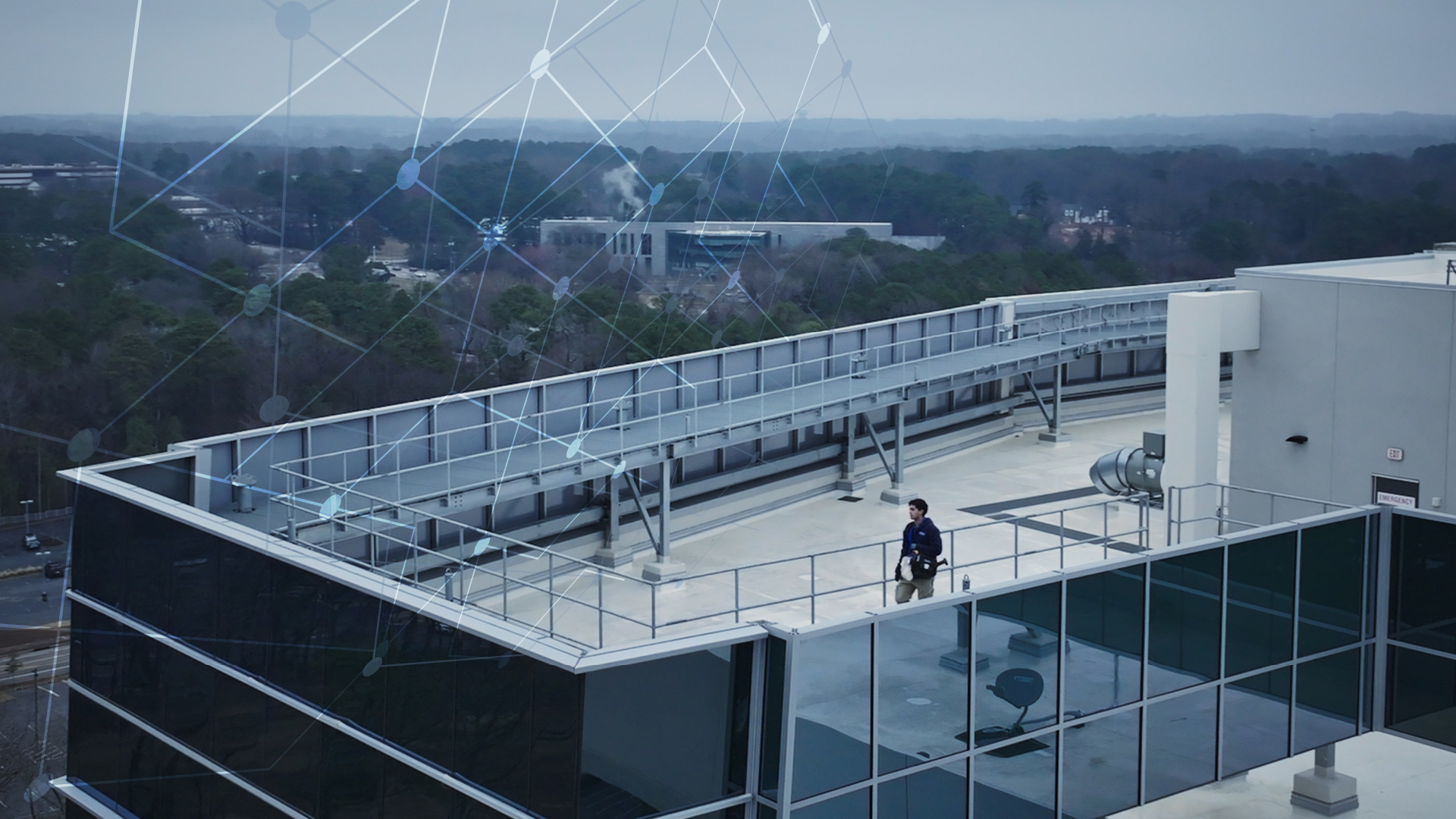
A collaborative look at the future of field service from XOi and Harris
The data center industry is being asked to deliver at a pace and scale that would have been unimaginable a decade ago. Artificial intelligence is accelerating demand for infrastructure while operators, contractors, and service providers face growing pressure to move faster without sacrificing quality, safety, or sustainability.

Speed to market
Data centers are revenue-generating infrastructure. Every day a facility is not operational, revenue is lost, making faster delivery a business requirement for clients. In a market where the difference between first and second can mean losing a location to a competitor, timeline compression is existential.

Data intelligence
XOi is building a data intelligence layer with the potential to compound those investments for Harris and contractors like them. By capturing field data at the source, routing it to the people who can act on it, and, as capabilities expand, feeding those insights back into products, work improves with each deployment.

Scalability
Hyperscale clients are moving beyond one-off custom builds toward repeatable systems that can be deployed across dozens of sites simultaneously. That demands a different approach to how mechanical, electrical, and plumbing systems are designed, specified, and manufactured.

Industrialized construction
Harris's approach begins at manufacturing and asks how systems can be built repeatably and faster without compromising quality. Planning and pre-construction move significantly earlier, with the investment made upstream and the payback compounding across subsequent projects.
Executive summary
The foundation was built before the boom
The data center industry is in the midst of an arms race. Hyperscale projects are being delivered at a pace and scale that would have been unimaginable a decade ago, and the pressure is not letting up. As artificial intelligence accelerates demand for infrastructure; operators, contractors, and service providers are all being asked to do more, faster, without sacrificing quality, safety, or sustainability.
This moment has exposed an infrastructure gap: for arguably the first time in history, demand has outpaced the construction and service industries’ capacity to meet them without extreme fatigue.
Like most manufacturers, Harris saw this coming. They understood the deeper forces already reshaping critical facility construction: speed-to-market pressure, a narrowing skilled labor pool, and clients demanding outcomes that traditional delivery models could not provide at scale. Following a continuous mission to support their customers strategically, Harris made a deliberate, strategic shift toward industrialized construction.
Among the lynchpins that make a shift to an industrialized construction model self-improving is the involvement of carefully curated data intelligence. For example, on the service side of Harris’ business, a partnership with XOi helps close the loop between what is built and how field maintenance techs need to administer service to those systems once they are operationally online. By accumulating a network of support that feeds real-world intelligence into actionable project data, Harris can strengthen service operations today and inform future project design and manufacturing decisions across the organization, regardless of the region being served.
Applied at scale and on the construction side of things, this can include (but is not limited to) the use of telematics software, IoT and Agentic solutions, and, of course, effective BIM and VDC modeling. The more data is accumulated, especially early in the process, the better Harris is able to secure schedules for clients that do not run into interruptions and stalls further down the line.
Together, Harris and the data intelligence tools they use represent something the industry has not yet widely built: an integrated system that learns from every asset and service event today, improves with every service call, and compounds its advantage with every asset it touches. This paper makes the case that the model they have built is the future of how critical facilities are designed, built, and maintained across every vertical, at any scale.
Learn more about this topic
You might also be interested in these resources

.webp)
.jpg)


.avif)

It’s time to turn insights into action.
See how XOi transforms asset data into intelligence your entire field service operation can act on.