
Capital planning is the next competitive advantage in field service
.jpg)

Key Takeaways
Capital planning is becoming a "must-have"
Customers are asking what to address now, what to budget for, and how much life is left in their assets. Contractors who can answer with real data become the partner customers trust to plan ahead.
Connected field data feeds planning
Accurate capital planning starts with what is captured on site. Site surveys, asset condition, photos, and quotes give teams the foundation to build clear, usable plans without starting from scratch.
Why capital planning is becoming a must-have, not a nice-to-have
Most contractors aren’t offering capital planning to their customers today.
Not because they don’t see the value. It’s just never been practical. It takes too long, the asset data isn’t reliable, and it usually ends up in a spreadsheet that’s outdated almost as soon as it’s finished. So it just doesn’t get done.
But that’s changing.
The industry is moving toward more predictive planning. Customers aren’t just looking for fixes, they expect you to have a point of view on what’s coming next. They’re asking better questions like:
- What can we address now to avoid bigger costs later?
- What should I budget for?
- How much life is left in this equipment?
These go beyond typical service questions, and most teams just aren’t equipped to answer them. But the contractors who can answer them with real data become more than just another vendor. They become the partner customers rely on to plan ahead.
That’s where the real opportunity starts. Instead of waiting for work to come to you, you can identify it earlier, shape it, and build a clearer path to future revenue.
And the truth of the matter is, if you’re not the one shaping those conversations early, you’re not the one winning that work.
Why most teams haven’t done this before
A lot of contractors know they should be offering capital planning. They just don’t have a clean way to do it.
The information is there, but it’s scattered. Technicians have pieces of it in their notes. Some of it lives in photos. Some of it shows up in quotes. None of it is really connected.
Most systems are built around the customer record, not the asset itself.
So building a capital plan turns into a manual project. Pulling data together, filling in gaps, trying to make it presentable. It’s time-consuming, requires equipment-level expertise, and it’s hard to repeat.
That’s why most teams have skipped it entirely.
It really starts in the field
If the data isn’t right, the plan isn’t right. It’s that simple.
This is where site surveys and quoting matter more than people realize. They’re not just standalone tools, they’re what make capital planning possible in the first place.
When a technician captures equipment details, condition, and photos in a consistent way, that information becomes usable. And when quotes are tied directly to that equipment, you now have real numbers tied to real assets.
Instead of guessing, you’re working from what’s actually on site.
That’s really what makes something like XOi Advisor work. It connects site surveys, quoting, and planning so the data captured in the field carries all the way through.
We dive deeper into how that value compounds when site surveys, quoting, and planning work together.
And once that foundation is in place, capital planning becomes something you can generate. With Advisor, you’re taking the data you already have and turning it into a structured capital plan in just a few clicks, without having to start from scratch or piece things together.
Just a clear, organized plan built from real field data.
What a capital plan looks like in practice
Let’s say you complete a site survey for a facility with multiple rooftop units.
From that one visit, you can build a capital plan that lays everything out:
- Every asset at the site
- Age and condition of each unit
- What needs attention now vs later
- A timeline across the next few years
- Budget ranges based on real quotes
It goes from “we have a lot of equipment here” to “here’s exactly what to expect and when.”
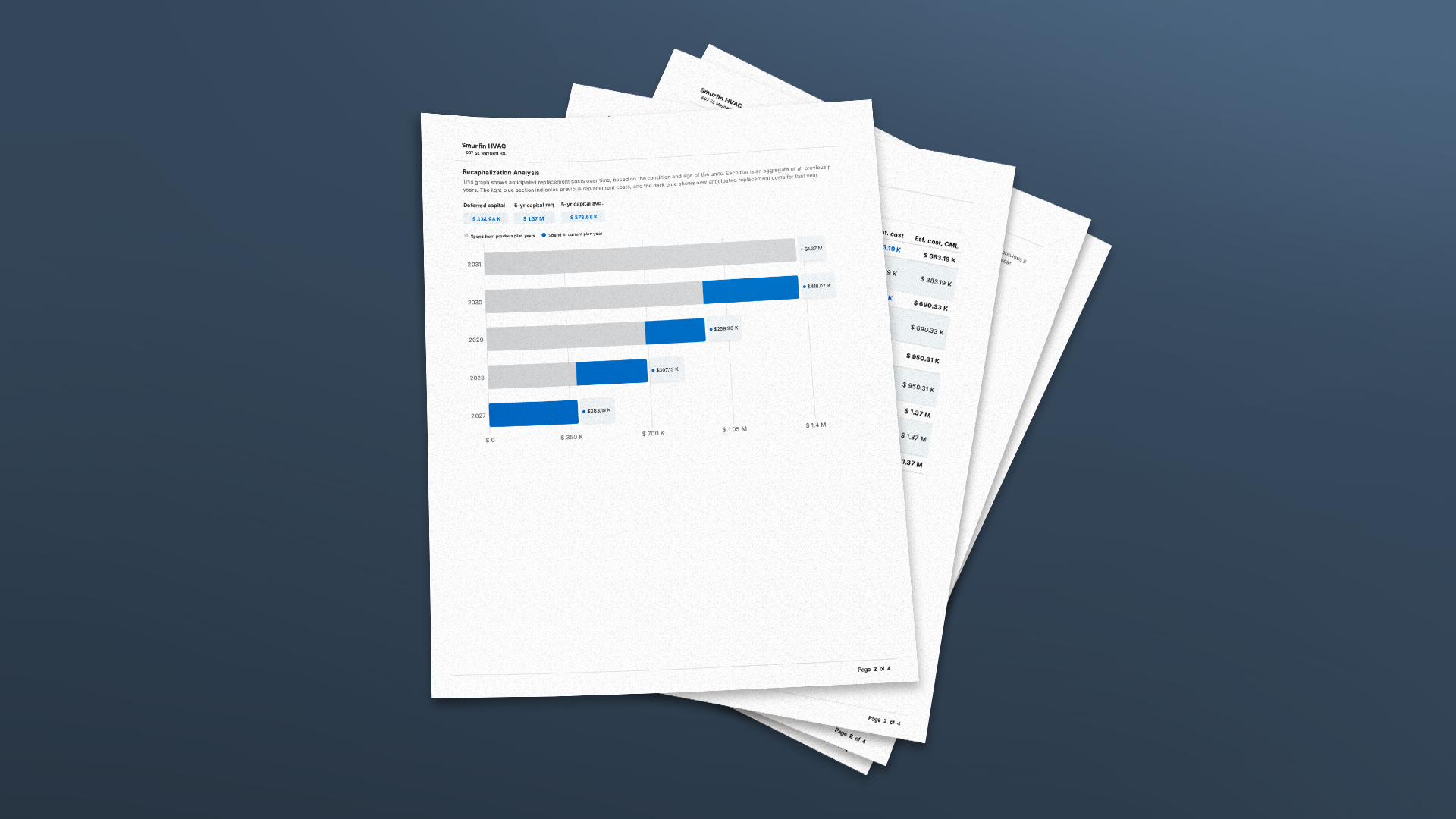
Customers aren’t just seeing what equipment is on site anymore. They’re seeing what’s coming next, what needs attention first, and how to plan for it with confidence. That’s what gives you a real competitive edge and sets you apart from every other service provider.
It also means you’re not just winning the work in front of you, you’re building a pipeline of what comes next.
Why this matters more than ever
Teams are being asked to do more with less. Labor is tighter, timelines are longer, and every decision is being looked at through the lens of ROI.
At the same time, the field service market is growing quickly, which means more competition and higher expectations across the board.
Customers expect more visibility, more clarity, and more guidance. They’re asking:
- What’s the condition of my equipment?
- What should I plan for next year?
- What can we fix now to avoid bigger costs later?
If you can’t answer those questions, it creates space for someone else to step in. And that’s lost revenue.
The contractors who can answer them are going to stand out. They’ll have better visibility into future work, stronger customer relationships, and a clearer story to tell.
For a long time,documenting the job was about proving the work got done. Now it’s about creating usable asset information that helps guide what comes next.
Capital planning is a big part of that shift. And with the right data in place, it doesn’t have to be complicated. It can actually be one of the easiest ways to move your business forward.
Ready to bring capital planning into your process? Take a closer look at XOi Advisor and see how it turns your field data into a clear, actionable capital plan.
FAQs
What is capital planning in field service and HVAC?
Capital planning in field service is the process of forecasting future equipment replacement and maintenance costs based on asset age, condition, and performance data. It helps both contractors and their customers budget more accurately and avoid unexpected failures.
Why is capital planning becoming more important for contractors?
Customers increasingly expect contractors to provide guidance beyond reactive service. They want visibility into asset condition, future replacement needs, and long-term budgeting requirements. Contractors who can support those conversations with accurate asset information are often involved earlier in planning discussions and have greater visibility into future work. As labor shortages, rising costs, and equipment complexity continue to increase, capital planning helps organizations make more proactive decisions.
Why do most contractors struggle to offer capital planning?
Most contractors have access to some asset information, but the data is often fragmented across service records, spreadsheets, photos, technician notes, and disconnected systems. Building a capital plan typically requires manually gathering equipment information, validating asset details, estimating replacement timelines, and creating customer-facing reports. The process is time-consuming and difficult to repeat consistently without structured asset data.
How do site surveys support capital planning?
Site surveys create the foundation for capital planning by capturing accurate asset information directly from the field. Equipment details, photos, condition assessments, and location information provide the context needed to understand what assets exist and how they are performing. When that information is captured consistently, organizations can build more accurate replacement forecasts, budget estimates, and long-term asset strategies.
What information should be included in a capital plan?
A capital plan typically includes a complete inventory of assets, equipment age, condition, expected useful life, replacement timing, and estimated budget requirements. Some plans also include repair-versus-replace recommendations, compliance considerations, and multi-year spending forecasts. The goal is to provide a clear view of future asset needs so organizations can prioritize investments and avoid unexpected costs.
How does capital planning help generate future revenue?
Capital planning gives contractors visibility into future opportunities before they become emergency projects. When asset condition, age, and replacement timelines are clearly documented, teams can identify upcoming work, support budgeting conversations, and help customers prepare for future investments. This creates a more predictable sales pipeline while helping customers make decisions with greater confidence.
Need more help?
Reach out to our team for guidance on your specific situation
Explore more on this topic
You might also be interested in these resources

.jpg)
.jpg)
.webp)
.webp)
.png)




Ready to put your asset data to work?
See how XOi turns asset intelligence into better outcomes for every stakeholder in the field service ecosystem.